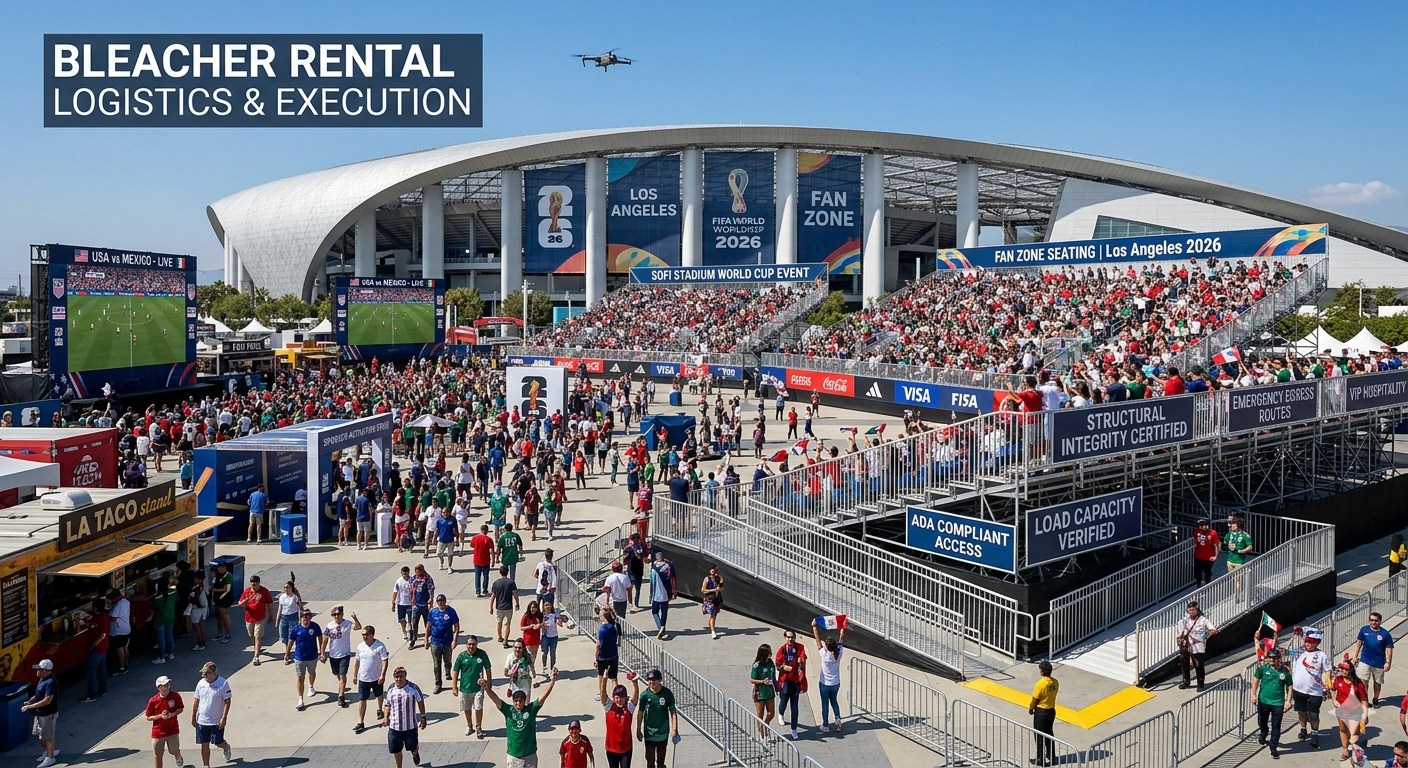
The 2026 FIFA World Cup will transform Los Angeles into one of the busiest sports cities in the world. With SoFi Stadium at the center of the action, surrounding areas will host fan zones, corporate activations, and community events. Successfully managing these activities requires meticulous logistics, setup, and execution planning for bleacher rentals.
Properly planned bleacher installations ensure safe seating, smooth crowd flow, and a professional, enjoyable experience for fans. This guide explores step-by-step strategies for logistics, setup, and execution of portable bleachers for major World Cup events in Los Angeles.
Pre-Event Planning: Laying the Foundation
1. Understanding Event Needs
- Identify the type of event: VIP, corporate, general fan zones, or community activations.
- Estimate attendee count to determine bleacher capacity.
- Consider special needs, such as ADA-compliant seating, VIP amenities, or sponsor zones.
2. Site Surveys and Assessments
- Evaluate potential installation areas: plazas, streets, parking lots, or parks.
- Assess surface stability, accessibility, and weather considerations.
- Identify potential obstacles, including overhead lines, trees, or uneven terrain.
3. Permits & Regulations
- Coordinate with LA city officials and SoFi Stadium authorities for required permits.
- Ensure compliance with California Building Codes, ADA regulations, and fire safety standards.
- Schedule inspections and approvals in advance to prevent delays.
Logistics: Coordinating the Details
1. Equipment Procurement
- Choose modular, portable bleacher systems suitable for event type and audience size.
- Verify that all components meet safety standards, including guardrails, handrails, and load capacities.
- Plan transportation logistics, ensuring timely delivery and on-site staging areas.
2. Timeline Management
- Establish a detailed timeline for delivery, assembly, and testing.
- Allocate buffer time for weather-related delays or unforeseen issues.
- Sequence setup to allow other vendors (stages, screens, food zones) to coordinate efficiently.
3. Staff & Coordination
- Assign a dedicated team for installation, supervision, and dismantling.
- Clearly define roles: lead installer, safety inspector, crowd management staff, and coordinators.
- Conduct pre-event briefings to ensure everyone understands responsibilities and emergency protocols.
Setup & Installation Best Practices
1. Safety First
- Confirm all bleachers are level, anchored, and structurally sound.
- Install guardrails, handrails, and step markers where required.
- Verify weight limits and ensure spacing is compliant with safety regulations.
2. Accessibility Considerations
- Include ADA-compliant ramps and seating areas proportionate to total capacity.
- Ensure pathways remain unobstructed for wheelchair access and emergency responders.
3. Layout & Placement
- Position bleachers for optimal sightlines to screens, stages, and activations.
- Maintain clear access points for crowd flow and emergency egress.
- Segment areas for VIP, general fans, and sponsor zones.
4. Integration with Event Activations
- Coordinate bleacher placement with food, beverage, merchandise, and interactive zones.
- Ensure sponsor visibility while maintaining fan comfort and accessibility.
- Use modular setups to allow flexibility for dynamic crowd movement.
Execution: Managing the Event Day
1. Early Arrival & Final Checks
- Arrive on-site several hours before fan arrival.
- Conduct a safety inspection of all bleachers and access points.
- Confirm that all signage, branding, and pathways are correctly installed.
2. Crowd Management
- Staff the bleacher areas with trained personnel for entry, exit, and emergency assistance.
- Monitor crowd behavior and ensure adherence to assigned seating.
- Use barriers or ropes to prevent overcrowding in high-traffic areas.
3. Real-Time Adjustments
- Be prepared to reconfigure bleachers based on crowd size or behavior.
- Address minor safety issues immediately to avoid disruptions.
- Maintain communication with event staff, security, and medical teams.
Post-Event Dismantling & Review
- Plan efficient dismantling and transport to storage.
- Inspect all components for damage or wear and repair as needed.
- Conduct a debrief to identify lessons learned for future activations.
- Collect feedback from fans, staff, and sponsors to improve subsequent events.
Tips for Optimizing Fan & Sponsor Experience
- Tiered seating ensures better sightlines and crowd organization.
- Clearly marked VIP and sponsor zones enhance branding and comfort.
- Accessible seating and pathways make the event inclusive.
- Integration with interactive activations boosts engagement and social media visibility.
Conclusion
Planning, coordinating, and executing bleacher rentals for major 2026 FIFA World Cup events in Los Angeles requires attention to detail, safety, and strategic logistics. By following best practices in pre-event planning, setup, accessibility, and real-time management, event organizers can create professional, safe, and enjoyable fan experiences.
Portable bleachers not only provide seating but also improve crowd flow, sponsor visibility, and overall event aesthetics. With proper logistics and execution, fan zones around SoFi Stadium and other key areas can deliver an unforgettable World Cup experience.