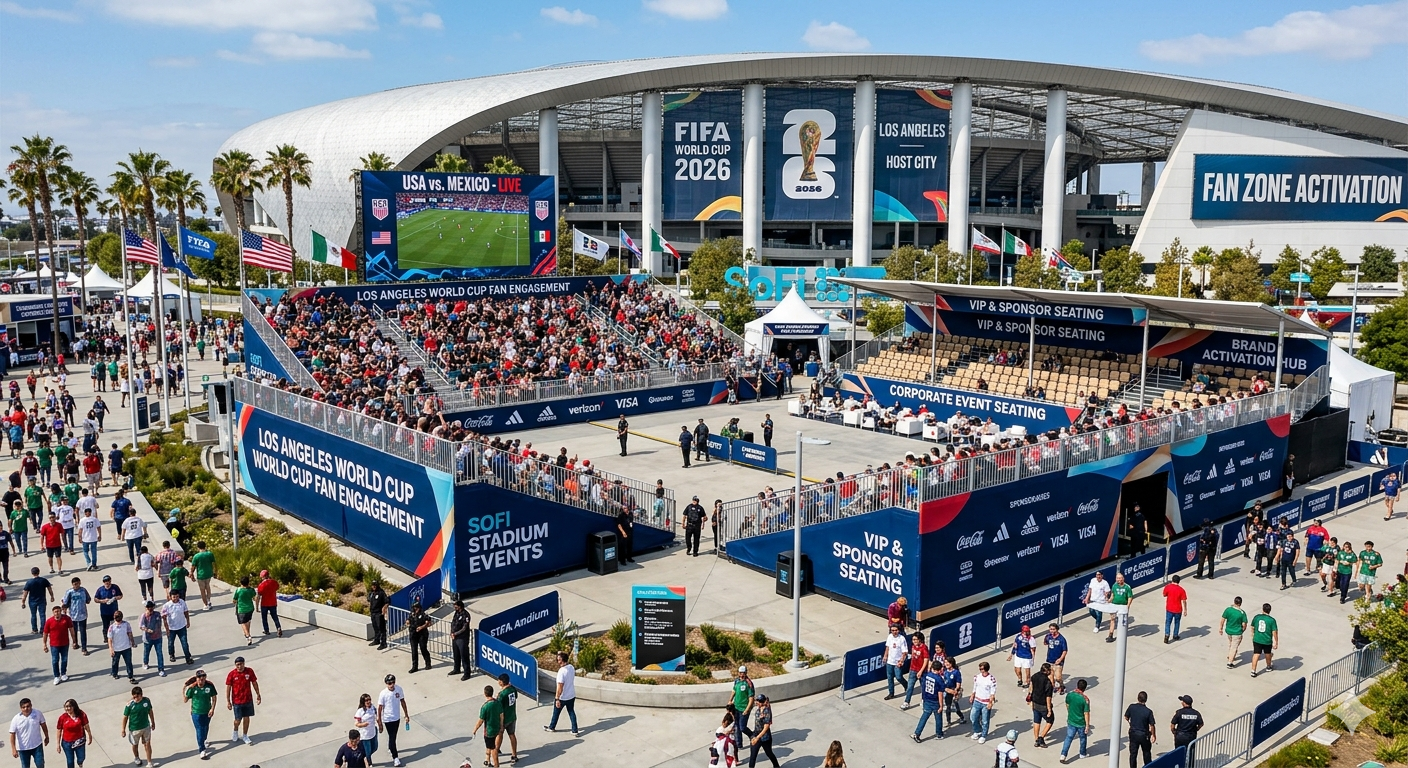
The 2026 FIFA World Cup is set to transform Los Angeles into a hub of international soccer activity. While SoFi Stadium will host the main matches, the surrounding streets, plazas, and parks will host corporate gatherings, fan zones, sponsor activations, and outdoor sports events. For event organizers, strategic bleacher placement is crucial to maximizing fan engagement, enhancing spectator experience, and ensuring safety and operational efficiency.
Bleachers are not just functional seating—they are a tool for organizing spaces, managing crowds, and highlighting sponsors and VIP guests. This guide explores best practices for strategic bleacher placement for corporate and sports events around Los Angeles during the 2026 World Cup.
Understanding Event Needs
Before placing bleachers, it is important to assess the specific needs of each event:
- Corporate Events: Brand activations, hospitality zones, and networking spaces often require elevated, comfortable seating to highlight VIP areas and sponsor logos.
- Sports Fan Zones: Open-air viewing areas for soccer matches need tiered seating for optimal visibility and crowd management.
- Community Engagement: Family-friendly zones and local fan groups benefit from smaller, modular bleacher installations that encourage interaction and social activities.
Understanding the type of audience and event format informs the size, layout, and placement of bleachers, ensuring that each activation is safe, engaging, and visually appealing.
Key Principles for Bleacher Placement
1. Sightlines and Visibility
One of the main purposes of bleachers is to enhance the fan viewing experience:
- Tiered Seating: Elevate fans so every row has a clear view of the action or screens.
- Optimal Distance: Avoid placing bleachers too far from screens, stages, or sponsor activations.
- Segmented Zones: Separate general seating, VIP areas, and corporate sponsor sections to prevent congestion.
Proper sightlines not only increase fan satisfaction but also improve media coverage and social media engagement.
2. Crowd Flow & Safety
Bleacher placement must account for crowd management:
- Ingress and Egress: Ensure multiple access points for safety and smooth traffic flow.
- Emergency Access: Maintain clear paths for security and emergency personnel.
- Capacity Management: Avoid overcrowding by planning the number of seats according to expected attendance and local regulations.
Safety considerations are particularly important for large-scale events like FIFA World Cup fan zones.
3. Modular & Flexible Layouts
Portable bleachers are modular, allowing planners to adapt the layout for different areas:
- Custom Zone Sizes: Scale from small community pods to large corporate or fan sections.
- Multi-Purpose Use: Combine seating with shaded areas, sponsor activations, and interactive displays.
- Easy Reconfiguration: Adjust layouts based on real-time crowd behavior or changing event needs.
Flexibility ensures that bleachers can accommodate varying event types and crowd sizes without compromising safety or comfort.
Types of Bleacher Installations
VIP and Corporate Sections
Corporate sponsors and VIP guests expect premium experiences:
- Cushioned or high-end seating for comfort
- Canopy or shaded options to protect from the sun
- Adjacent networking or lounge areas
Strategic placement of these sections can increase sponsor visibility and provide a professional environment for client engagement.
Fan Zones & Sports Viewing Areas
For general soccer fans, tiered seating improves engagement:
- 6–12 tier risers depending on expected crowd size
- Integrated handrails and guardrails for safety
- Placement near screens or activation hubs for optimal viewing
Community & Interactive Pods
Smaller installations foster interaction:
- 3–6 tier portable bleachers for families or local clubs
- Positioned near interactive zones or performance areas
- Branded with partner logos for social engagement
Regulatory Compliance and Safety Considerations
All bleacher installations must meet local regulations:
- California Building Codes
- ADA accessibility standards
- Fire and emergency egress regulations
Certified installers provide documentation, access ramps, guardrails, and inspections to ensure compliance. Safety is a top priority, particularly when hosting large-scale public events.
Optimizing Sponsor Visibility
Bleachers are not just seating—they are branding platforms:
- Logo banners on risers, steps, or side panels
- Segmented sponsor zones for premium visibility
- Media-friendly setups for photography and social media
Well-branded seating areas enhance sponsor ROI, attract media coverage, and elevate the perceived professionalism of the event.
Planning & Installation Best Practices
Early Planning
- Begin planning 6–12 months in advance to coordinate permits, surveys, and logistics.
- Work with local authorities, security teams, and event staff to align objectives.
Site Assessment
- Conduct a detailed site survey to determine optimal placement, spacing, and safety requirements.
- Analyze crowd flow and identify potential bottlenecks.
Setup Timing
- Install bleachers during off-peak hours to minimize disruption.
- Conduct thorough safety checks before opening to the public.
Post-Event Considerations
- Plan for efficient dismantling and storage of portable bleachers.
- Collect feedback on seating placement to improve future events.
Conclusion
Strategic bleacher placement is a vital component of successful corporate and sports events surrounding the 2026 FIFA World Cup in Los Angeles. By focusing on sightlines, crowd management, modularity, and sponsor visibility, event planners can create fan-friendly zones that are safe, engaging, and media-ready.
With careful planning, attention to regulatory compliance, and professional installation, bleacher seating transforms open-air events into organized, high-impact experiences that delight fans and elevate sponsor engagement.