Organizing events in Southern California—whether it’s a high-profile sports tournament, school graduation, community festival, or corporate gathering—requires careful planning, especially when it comes to seating.
One of the most important decisions event organizers face is choosing between temporary portable bleachers and permanent seating structures. Each option has its own advantages depending on event type, frequency, budget, and long-term goals.
This guide breaks down the pros, cons, and strategic considerations to help you maximize guest comfort, safety, flexibility, and return on investment (ROI).
Understanding Temporary Bleachers
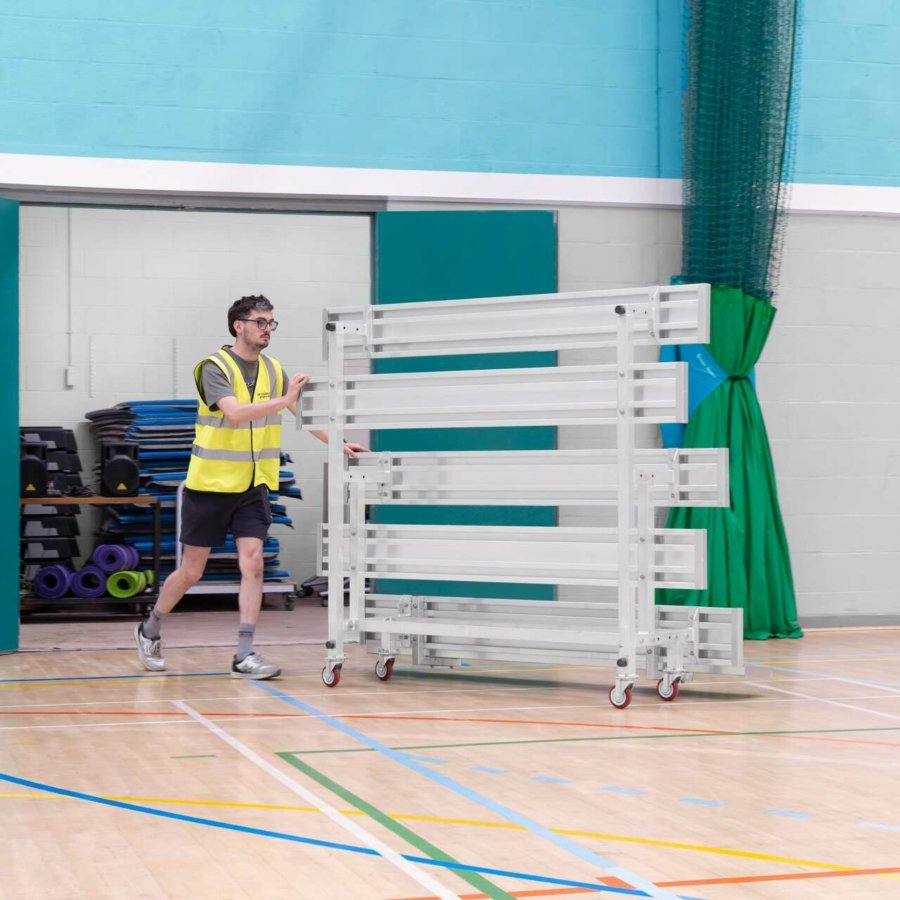
Temporary bleachers are modular, portable seating systems designed for flexibility and quick deployment. They are widely used across Southern California for both small and large-scale events.
Advantages of Temporary Bleachers
1. Flexibility & Mobility
- Can be installed at multiple venues
- Easily adaptable to different event layouts
- Scalable from 50 to 1,000+ attendees
- Suitable for indoor gyms, outdoor fields, and temporary venues
This flexibility makes them ideal for organizers who host varied or recurring events.
2. Cost-Effective Solution
- No large upfront capital investment
- Pay only when needed
- Eliminates long-term maintenance costs
For event planners, this means better budget control and lower financial risk.
3. Fast Setup & Removal
- Quick installation by professional crews
- Efficient teardown after events
- Minimal disruption to venue operations
This is especially important for multi-use venues such as schools or public parks.
4. Customization & Branding Opportunities
Temporary seating allows full customization:
- Sponsor logos on bleachers or chairs
- Custom colors for teams or branding
- VIP courtside seating areas
- Premium seating with armrests, cupholders, and enhanced comfort
This transforms seating into a powerful marketing and revenue tool.
Considerations for Temporary Bleachers
- Must comply with OSHA and ADA standards at every installation
- Requires professional setup for safety
- Logistics planning for delivery, installation, and removal
Understanding Permanent Bleachers
Permanent bleachers are fixed seating structures designed for long-term use in dedicated venues like stadiums and arenas.
Advantages of Permanent Bleachers
1. Long-Term Durability
- Built to last for decades
- Typically made from reinforced steel or aluminum
- Designed for consistent heavy use
Ideal for venues with regular, high attendance.
2. High Capacity & Stability
- Engineered for large crowds
- Fixed layout ensures consistent sightlines
- Suitable for schools, stadiums, and sports complexes
3. Low Day-to-Day Operations
- No setup or teardown required
- Minimal operational management
- Reliable for recurring events
Considerations for Permanent Bleachers
- High upfront construction cost
- Limited flexibility (fixed location and layout)
- Difficult to adapt for different event types
- Branding and customization options are more limited
Temporary vs Permanent Bleachers: Key Comparison
| Factor | Temporary Bleachers | Permanent Bleachers |
|---|---|---|
| Cost | Lower upfront cost | High initial investment |
| Flexibility | High – movable & scalable | Low – fixed |
| Setup | Quick install & removal | No setup required |
| Customization | High – branding & VIP options | Limited |
| Usage | Multi-event, multi-location | Single venue, long-term |
| Compliance | Checked per event | Built into structure |
Real-World Use Cases in Southern California
Temporary Bleachers
- School sports tournaments
- Community festivals and concerts
- Corporate events and brand activations
- Multi-day or traveling events
These setups benefit from speed, flexibility, and branding options.
Permanent Bleachers
- High school stadiums
- University athletic facilities
- Dedicated sports arenas
- Long-term municipal venues
Best for locations with consistent attendance and fixed schedules.
Major Event Applications
For large-scale global events in Los Angeles such as:
- NBA All-Star Weekend 2026
- FIFA World Cup matches
- Olympic events
Temporary seating plays a crucial role by providing:
- Flexible capacity adjustments
- VIP courtside seating areas
- Sponsor branding opportunities
- Compliance with OSHA and ADA standards
How to Choose the Right Option
1. Evaluate Event Frequency
- One-time or occasional events → Temporary
- Year-round use → Permanent
2. Analyze Guest Capacity Needs
- Variable audience sizes → Temporary
- Consistent large crowds → Permanent
3. Consider Branding & Sponsorship Goals
- High sponsor visibility → Temporary seating
- Minimal branding needs → Permanent seating
4. Review Budget & ROI
- Limited budget → Temporary solution
- Long-term investment → Permanent structure
5. Ensure Safety & Compliance
- Temporary seating must be professionally installed and inspected
- Permanent seating must meet building codes and safety regulations
Why Temporary Seating Is Growing in Popularity
Modern event trends are shifting toward flexibility, scalability, and experience-driven design.
Temporary bleachers and courtside seating allow organizers to:
- Adapt quickly to different event types
- Maximize revenue through sponsorships
- Deliver premium fan experiences
- Optimize space usage across multiple events
Key Takeaways
- Temporary bleachers provide flexibility, cost savings, and branding opportunities
- Permanent bleachers offer stability and long-term reliability
- The right choice depends on event frequency, venue type, and budget
- Premium courtside seating enhances VIP experience and sponsor value
- Strategic planning ensures safe, efficient, and successful events
Call-to-Action (CTA)
Ensure your Southern California event is equipped with the right seating solution—temporary or permanent—to maximize guest comfort, safety, and sponsor visibility.
Start planning your ideal seating layout today and create a professional, scalable, and memorable event experience.